



Nitrates: the big news this week is around the publication of the nitrates action programme for the next four years. While still in draft form, proposals rarely change, so we can have high certainty that most of what is proposed will be in law if the plan is passed by Europe.
The main ‘costs’ at farm level will undoubtedly be the requirement for a 21% increase in slurry storage per cow by 1 October 2028. This means the amount of slurry produced by a dairy cow per week is increasing from 0.33m3/week to 0.4m3/week.
There are no proposals to change the rates for other stock. The other big change is around stocking rates on the milking platform.
The proposal is that on higher stocked milking platforms, between 25% and 100% of the slurry produced on the holding must be spread on the lands away from the platform. On farms in the middle band and with an overall chemical N allowance of 214kg N/ha corresponding to an organic stocking rate of greater than 210kg N/ha, they will have to demonstrate that slurry is moved to the outfarms if they are stocked greater than 286kg N/ha organic N on the milking block.
This corresponds to a stocking rate of 3.12 cows/ha if in the middle band. The amount to be moved to outfarms increases in line with higher stocking rates. If stocked greater than 3.51 cows/ha on the milking block, at least 75% of the slurry will have to move to the outfarms. The expectation is farmers will have to notify the Department when the slurry is moved in the same way as they do when slurry is exported.
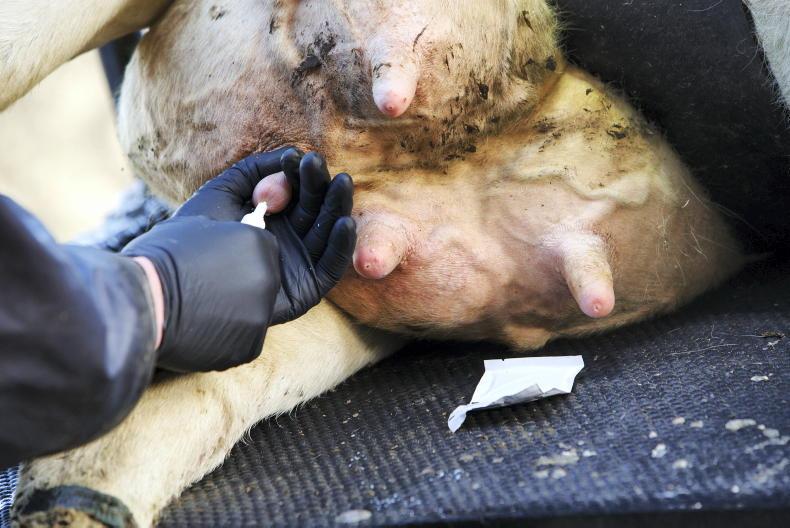
Teat sealing: with days at grass for both milking cows and heifers now limited, thoughts will soon be turning to drying off. In terms of heifers, a significant number of farmers are now teat sealing heifers as part of routine practice.
For me, it’s a tool to help reduce infection in herds with a history of infection, particularly in first calving heifers in the first few months of lactation.
Teagasc research would show that a significant proportion of these infections start in the pre-calving period. A growing number of farmers decide to teat seal heifers much earlier than that while they are still at grass.
This ensures a much cleaner environment both before and after teat sealing. There are dedicated technicians carrying out this task using turnover crates, which makes the job much safer and easier.
Dairy Day: Preparations are in full swing for Dairy Day taking place this year on 15 November at UL Sports Arena in Limerick.
The full programme will be published in the free supplement out next week. Topics discussed will include reducing costs at farm level with Irish and New Zealand speakers, the outlook for milk price with Conor Galvin and Pat Murphy, CEO’s of Ornua and Kerry Dairy Ireland respectively as well as Christophe Lafougere, leading market analyst with GIRA.
As outlined on pages 34 and 35, we also have the chairs of six of the biggest co-ops in the country discussing the future of the co-op movement.




SHARING OPTIONS